

Code: 1-MMN-525
Continuous assessment: Homework solutions and evaluation of the first set of tasks
solutions and evaluation of the second set of tasks
Final assessment:
86%-100% A
72%-86% B
58%-72% C
44%-58% D
30%-44% E
Exercise examples:
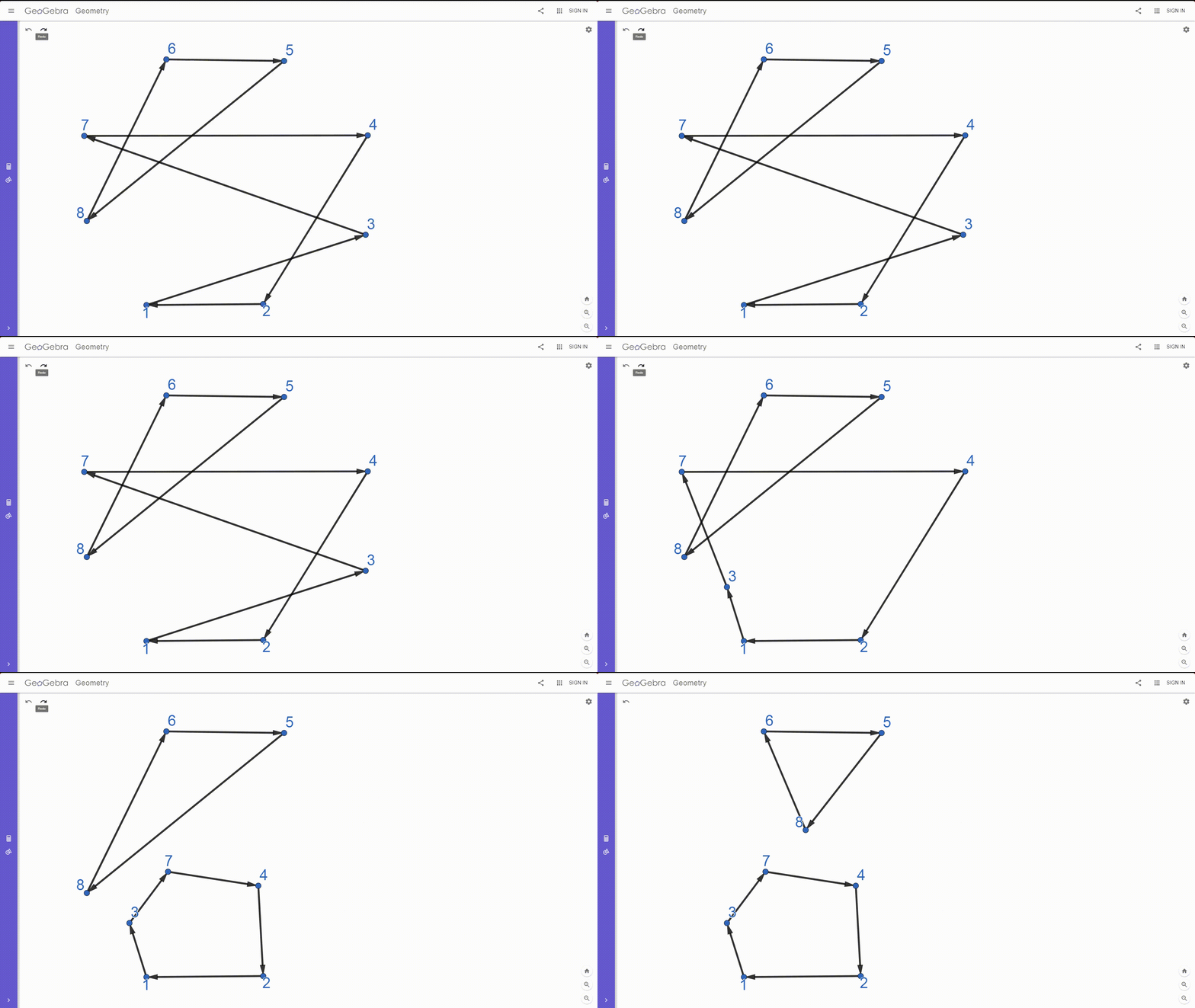
Procedure for decomposing a permutation into disjoint cycles for example 3c). The permutation can be represented using a directed graph, where arrows indicate how each number is mapped (see gif). We then untangle the resulting graph (see gif) and find that the permutation consists of two cycles, of lengths three and five, so a possible decomposition is (658)(13742). A cycle of length n consists of n-1 transpositions (swaps of two elements) and is even if n is odd, and odd if n is even. The parity of a permutation is the sum of the parities of all its disjoint cycles. In this case, both cycles are even, so the permutation is even.

Completed homework from exercises 3, 4 and 8 can be sent together, i.e. all in one email, to the address rusin3(at)uniba.sk by the end of next week (3 May).
Completed homework from exercises 9 and 10 can be sent together, i.e. all in one email, to the address rusin3(at)uniba.sk by the end of next week (24 May).
Literature: